🤖 Generated with AI assistance · Does not replace individualized medical advice.
AI in Neuro-Oncology: Integrating Multimodal Data for Precision Care
AI Transparency Notice: This post was generated with the assistance of AI tools to summarize and structure scientific literature. It is for informational purposes only and does not constitute medical advice.
Lead
This narrative review synthesizes 2020–2026 literature on machine learning in neuro-oncology. It highlights how multimodal AI systems integrating imaging, molecular, and clinical data outperform single-modality models, though widespread clinical adoption is currently hindered by validation gaps and interpretability challenges.
Key Facts
| Domain | Key Insight |
|---|---|
| Model Performance | Multimodal AI systems integrating imaging, molecular, histopathologic, and clinical data frequently demonstrated improved predictive performance compared with single-modality models PMID: 42862479. |
| Data Scope | The review covers traditional ML (regression, random forests) and advanced architectures (LLMs, vision transformers, graph neural networks) applied to neuro-oncology datasets PMID: 42862479. |
| Primary Barrier | Widespread clinical implementation remains limited by dataset heterogeneity, limited external validation, interpretability concerns, and inconsistent patient representation PMID: 42862479. |
| Temporal Focus | The review preferentially includes studies published between 2020 and 2026, with additional landmark studies included where relevant PMID: 42862479. |
Why It Matters / Context
Neuro-oncology presents unique challenges for predictive modeling due to the profound heterogeneity in tumor biology, imaging characteristics, and treatment responses. While molecular databases have significantly advanced our understanding of brain tumor biology, many existing datasets lack the breadth of data necessary for generalizable predictive modeling. This gap has driven the exploration of Artificial Intelligence (AI) and Machine Learning (ML) to integrate these heterogeneous data sources, aiming to support precision neuro-oncology.
The evolution from traditional statistical methods to deep learning architectures represents a shift in how we process clinical information. Traditional ML approaches, such as regression-based models, random forests, support vector machines, and gradient boosting algorithms, have long been applied to survival prediction, recurrence classification, and treatment response estimation. However, the recent emergence of advanced architectures—including natural language processing (NLP), large language models (LLMs), vision transformers, geometric deep learning, and graph neural networks—has expanded the capacity to analyze unstructured and multimodal data sources. These sources include radiology reports, histopathology slides, MRI volumes, molecular datasets, and electronic health records (EHRs).
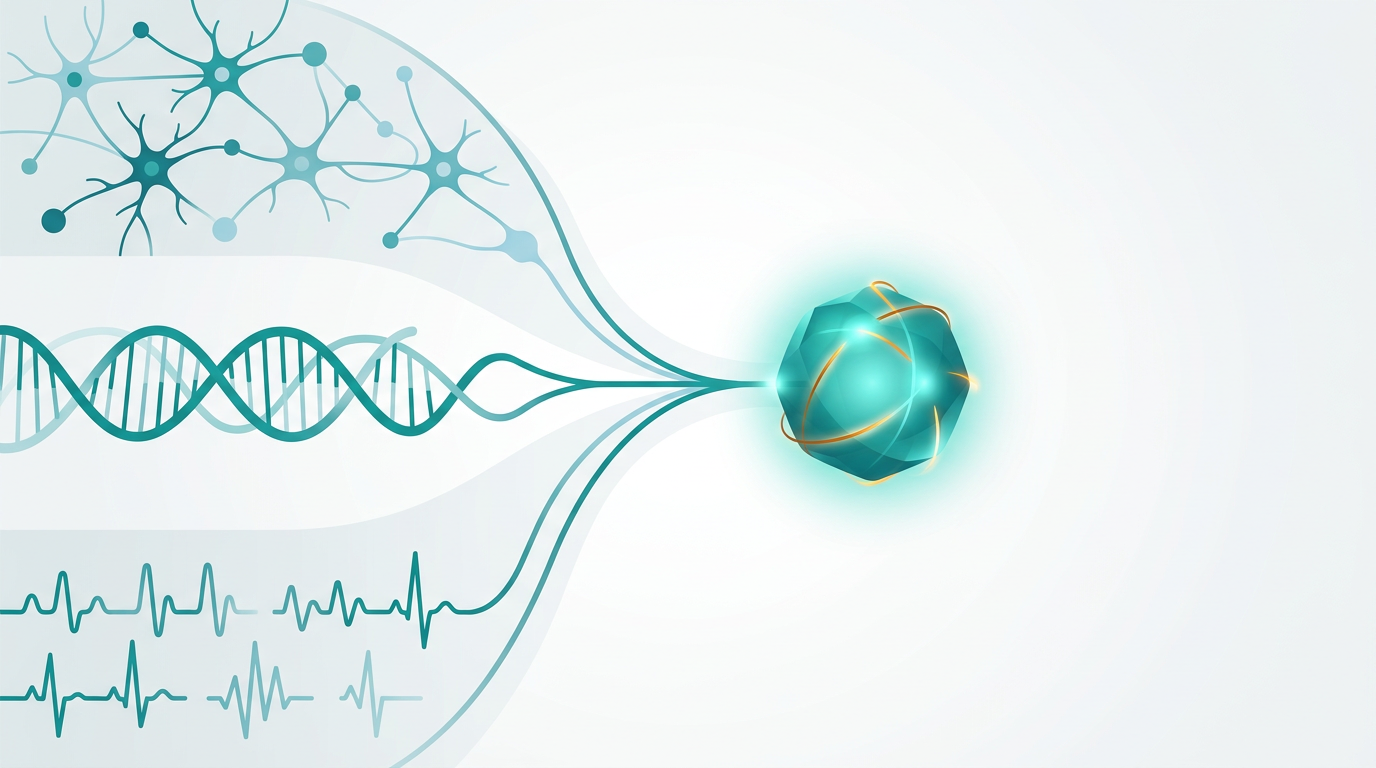
The critical finding of this review is that multimodal AI systems, which integrate imaging, molecular, histopathologic, clinical, and socioeconomic data, frequently demonstrate superior predictive performance compared to models relying on a single modality. This suggests that the complexity of neuro-oncological decision-making requires a similarly complex, integrated data approach to accurately reflect real-world clinical scenarios.
Details
The review categorizes the application of AI in neuro-oncology into traditional and advanced methodological frameworks. The following table summarizes the primary model classes and their specific applications as described in the source material.
| Model Category | Specific Architectures/Algorithms | Primary Applications | Data Sources Integrated |
|---|---|---|---|
| Traditional ML | Regression-based models, Random Forests, Support Vector Machines (SVM), Gradient Boosting | Survival prediction, Recurrence classification, Treatment response estimation, Molecular biomarker prediction | Clinical, Imaging, Molecular, Population-level datasets PMID: 42862479 |
| Advanced AI/Deep Learning | Natural Language Processing (NLP), Large Language Models (LLMs), Vision Transformers, Geometric Deep Learning, Graph Neural Networks (GNNs) | Analysis of unstructured and multimodal data | Radiology reports, Histopathology slides, MRI volumes, Molecular datasets, Electronic Health Records PMID: 42862479 |
| Multimodal Systems | Integrated frameworks combining the above | Prognostic assessment, Treatment stratification, Precision care | Imaging, Molecular, Histopathologic, Clinical, Socioeconomic data PMID: 42862479 |
Note: The review indicates that while traditional models remain foundational, the integration of advanced architectures is what enables the handling of unstructured data (e.g., text reports, raw images) that traditional tabular ML cannot effectively process.
Limitations
Critical Limitations for Clinical Translation
Despite the promising performance metrics of multimodal AI systems, the review explicitly identifies several barriers preventing widespread clinical implementation:
1. Dataset Heterogeneity: Inconsistent data formats and standards across institutions make model generalization difficult.
2. Limited External Validation: Most current models remain investigational and lack robust validation on independent, external cohorts.
3. Interpretability Concerns: Complex deep learning architectures often function as “black boxes,” raising concerns about clinical trust and regulatory approval.
4. Representation Gaps: There is inconsistent representation across patient populations, which may lead to biased predictions for underrepresented groups.
Source: PMID: 42862479
Clinical Takeaway
Clinicians should view current multimodal AI tools in neuro-oncology as investigational aids for prognostic stratification rather than definitive diagnostic standards, prioritizing models that demonstrate external validation and transparent interpretability.
Full Reference
Hey G, Del Sesto M, Still M, Patel G, Crlenjak N, Dagra A. Leveraging traditional and advanced machine learning for comprehensive oncology data integration and outcome prediction. Journal of Neuro-Oncology. 2026. PMID: 42862479 [DOI: 10.1007/s11060-026-05774-2]